What Is a Three-Phase Motor? Benefits, Working Principle & Industrial Applications
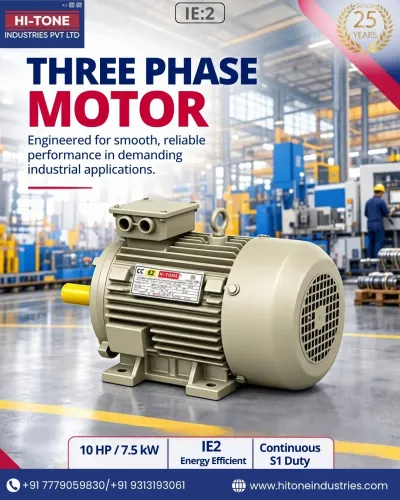
A three-phase motor converts electrical energy into mechanical motion, enabling efficient operation of equipment in industrial facilities and commercial settings. These motors are commonly installed in manufacturing facilities, pumps, compressors, conveyor systems, and heavy-duty equipment where stable power delivery and dependable performance are essential.
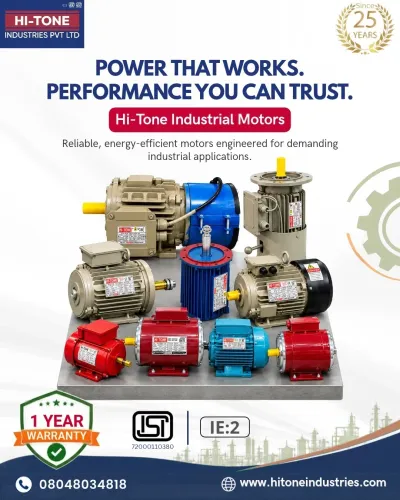
HI-TONE Industries Pvt. Ltd. provides industrial motor solutions designed for efficient operation, long-term durability, and consistent performance. With 25 years of industry experience, the company meets diverse industrial needs with a focus on quality and reliable motor technology.
If you are looking for a Three-Phase Motor Manufacturer in Ahmedabad, understanding the working principle, benefits, and applications of these motors can help you choose the right product for your machinery.
What Is a Three Phase Motor?
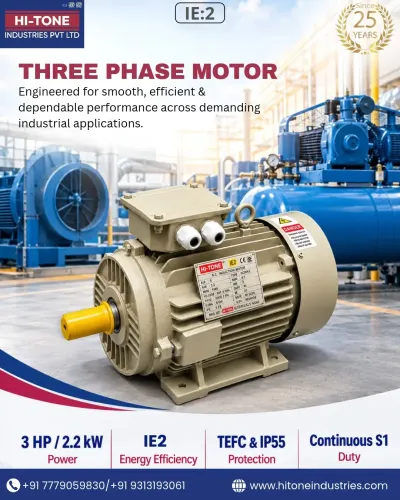
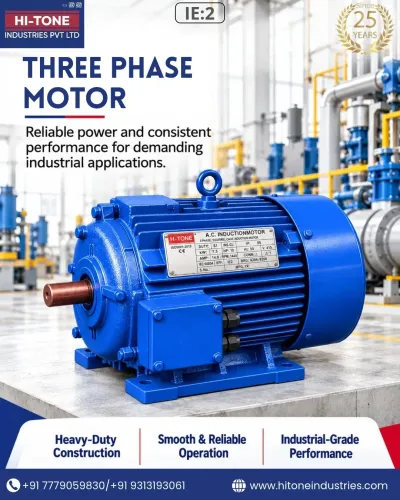
A three-phase motor operates on a three-phase AC power source, converting electrical input into mechanical output to run a variety of industrial machines and equipment. It is commonly used in industrial environments because it operates reliably, converts power efficiently, and suits a wide range of machinery.
Three-phase electric motors are available in different power ratings, speeds, frame sizes, and mounting configurations. These options let businesses select motors to match their equipment requirements and operating conditions.
Industrial buyers looking for a Three-Phase Motor Supplier in Gujarat should consider motor specifications, efficiency, build quality, maintenance needs, and application compatibility before purchasing.
How Does a Three-Phase Motor Work?
A three-phase motor works by interacting magnetic fields and electric current.
When a three-phase AC supply passes through the stator windings, it generates a rotating magnetic field. This field interacts with the rotor and produces torque, causing the motor shaft to rotate.
In a three-phase induction motor, the rotating magnetic field induces an electric current in the rotor, producing the torque required to turn the motor shaft. This process transforms electrical power into mechanical motion, enabling the motor to operate connected equipment efficiently.
The main components of a three-phase motor include:
* Stator: The stationary part that contains the electrical windings.
* Rotor: The rotating component that produces mechanical motion.
* Motor Shaft: Transfers rotational power to connected equipment.
* Bearings: Support the shaft and facilitate smooth rotation.
* Motor Housing: Protects internal components and provides structural support.
* Cooling System: Helps control operating temperature.
The motor's performance depends on its design, electrical supply, load conditions, installation, and maintenance.
What Are the Benefits of a Three-Phase Motor?
Three-phase motors are widely used in industrial applications because they offer several practical advantages.
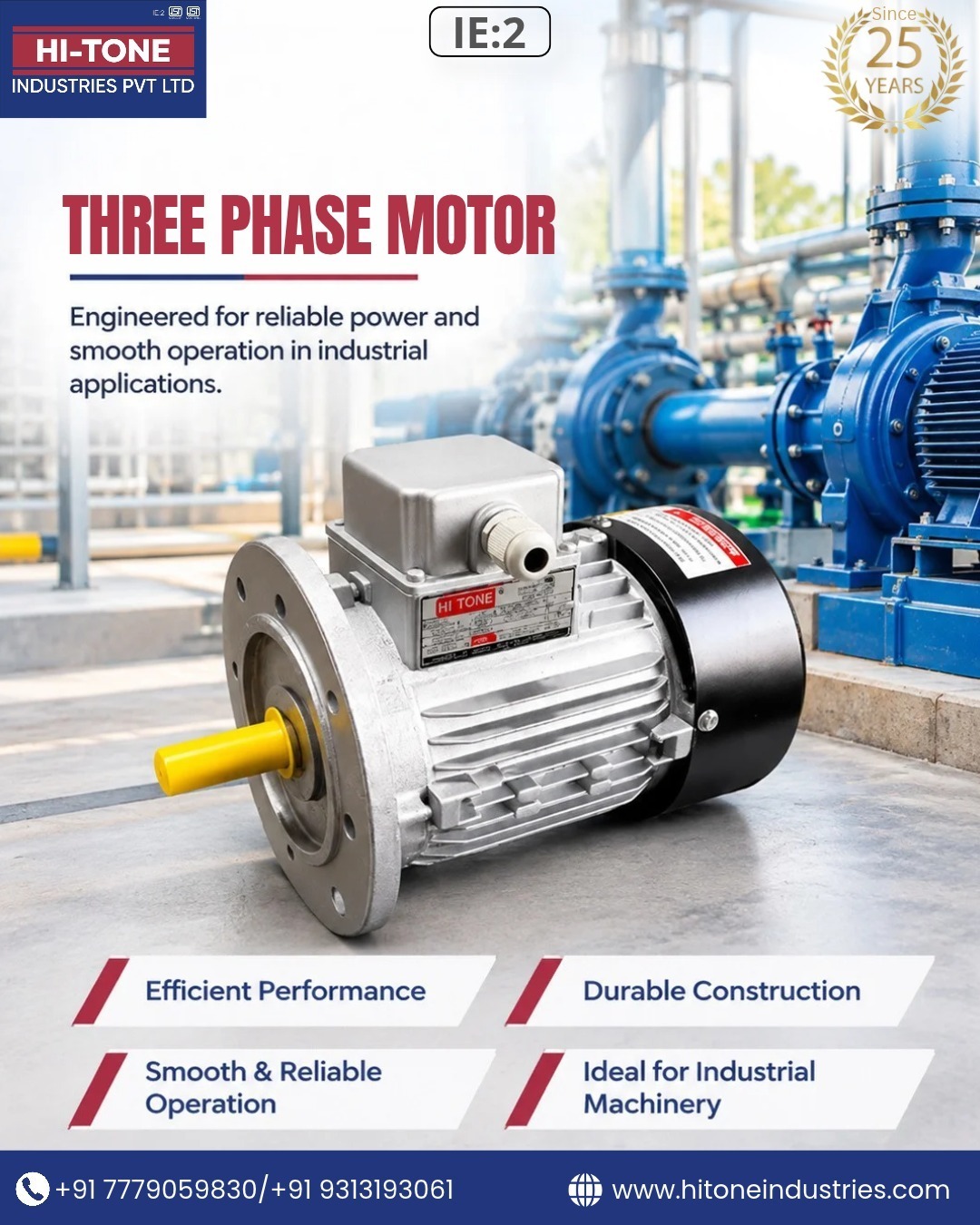
1. Efficient Performance
Selecting the right three-phase motor supports efficient energy conversion and reliable performance, making it well suited for industrial equipment that runs for extended periods or under heavy loads.
2. Smooth and Reliable Operation
A three-phase power supply creates a rotating magnetic field, enabling the motor to deliver steady torque and operate smoothly. When installed and operated correctly, the motor can provide consistent performance for connected machinery.
3. Durable Construction
Industrial motors are designed to operate under different working conditions. Appropriate housing, insulation, bearings, and cooling arrangements support durability and service life.
4. Suitable for Industrial Machinery
A three-phase motor can power a wide range of equipment, including pumps, compressors, conveyors, fans, blowers, and production machinery, depending on its specifications.
5. Lower Maintenance Requirements
Many three-phase induction motors feature a robust design and do not require brush replacement. Regularly inspect bearings, electrical connections, ventilation, and insulation.
6. Versatile Installation Options
Three-phase motors are available in various power ratings, speeds, mounting arrangements, and enclosure types. Choosing the correct configuration helps businesses integrate the motor into their existing systems.
What Are the Industrial Applications of Three-Phase Motors?
A three-phase industrial motor suits a wide range of industrial and commercial applications.
Common applications include:
* Manufacturing Plants: Power production equipment and industrial machinery.
* Water Pumps: Supports water supply, irrigation, and industrial fluid transfer.
* Compressors: Drive compressed-air systems and process equipment.
* Conveyor Systems: Support material handling in factories and warehouses.
* HVAC Systems: Operates compatible industrial fans and blowers.
* Packaging Machinery: Powers automated packaging and production lines.
* Agricultural Equipment: Drives compatible irrigation pumps and machinery.
* Processing Industries: Supports machinery used in manufacturing and material processing.
Businesses looking for a Three-Phase Motor Distributor in India should identify the required motor specifications and intended application before choosing a suitable product.
How to Choose the Right Three-Phase Motor?
Selecting the right motor is important for operational efficiency, equipment safety, and long-term reliability.
When choosing a three-phase motor, review the following specifications to ensure it suits your operational needs:
1. Motor Capacity: Determine the required power output in kilowatts (kW) or horsepower (HP) based on the machinery's load requirements.
2. Running Speed: Check the rated speed in revolutions per minute (RPM) to ensure proper equipment operation.
3. Power Supply Requirements: Check that the motor’s rated voltage and frequency align with the available electrical supply to ensure safe and efficient operation.
4. Motor Type: Determine whether an induction motor or another motor design is suitable.
5. Mounting Configuration: Check whether you need a foot-mounted, flange-mounted, or other arrangement.
6. Efficiency: Compare applicable motor efficiency ratings and expected energy consumption.
7. Operating Environment: Consider dust, moisture, temperature, ventilation, and enclosure protection.
8. Maintenance and Support: Evaluate maintenance requirements, spare parts availability, and manufacturer support.
Consulting a qualified professional can help you choose a motor that meets your machinery's operating requirements.
Why Choose HI-TONE Industries Pvt. Ltd. for Three Phase Motors?
HI-TONE Industries Pvt. Ltd. offers three-phase motors with efficient performance, durable construction, and smooth operation. With 25 years of industry experience, the company provides industrial product solutions for businesses evaluating motor requirements.
If you are searching for the Best Three-Phase Motor Manufacturer in Ahmedabad, consider the motor's technical specifications, application suitability, efficiency, mounting options, and available support before deciding.
Contact HI-TONE Industries to discuss your industrial motor requirements and confirm product specifications and availability.
Frequently Asked Questions (FAQs)
1. What are the common applications of a three-phase motor?
Three-phase motors widely drive industrial machinery and equipment, including pumps, compressors, conveyor systems, fans, blowers, and various manufacturing machines. It is commonly selected for applications that require reliable mechanical power.
2. How does a three-phase motor work?
A three-phase motor works by generating a rotating magnetic field through its stator windings. The magnetic field interacts with the rotor to produce torque and rotate the motor shaft.
3. What are the main benefits of a three-phase motor?
The main benefits include efficient power conversion, smooth torque production, durable construction, suitability for industrial machinery, and relatively low maintenance for many induction motor designs.
Keywords